![Selling a House With Crawl Space Water in [market_city]](https://image-cdn.carrot.com/eyJidWNrZXQiOiJwcm9kdWN0aW9uLmNhcnJvdC11cGxvYWRzLm9uY2Fycm90LmNvbSIsImtleSI6InVwbG9hZHMvc2l0ZXMvNjk3NDIvMjAyNi8xMC9TZWxsaW5nLWEtSG91c2UtV2l0aC1DcmF3bC1TcGFjZS1XYXRlci5qcGciLCJlZGl0cyI6eyJyZXNpemUiOnsid2lkdGgiOjExNTJ9LCJ0b0Zvcm1hdCI6IndlYnAiLCJ3ZWJwIjp7InF1YWxpdHkiOjcwfX19)

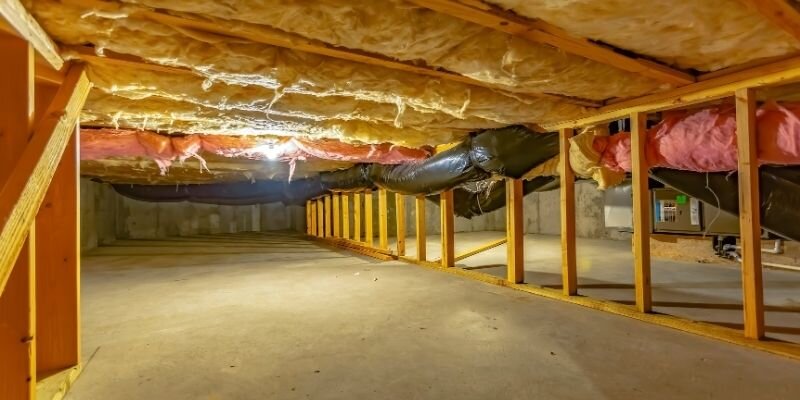
Drive the older blocks of Harlingen, Brownsville, or Corpus Christi, and you’ll spot them. They’re houses lifted a foot or two off the dirt on pier-and-beam foundations. Those crawl spaces were built to breathe. After a week of Gulf moisture and a stalled storm, plenty of them hold standing water instead. One August, a seller called me with a few inches of water under his living room floor and a buyer’s inspector already booked for Thursday. I get that call a lot in this state. Water under a Texas house is a problem you can solve, and the order you solve it in decides what you keep at closing.
The Order You Should Tackle This In
Stop the water first. Nothing else matters until the source is dry.
I’ve watched sellers spend thousands on mold removal in March and see the same black fuzz back by June. Nobody had fixed the downspout dumping against the pier line. Figure out what you’re up against. It could be surface drainage, a supply line leak, a failed sewer lateral, or groundwater that rises with the water table. A plumber with a camera answers that faster than any mold company will.
Once the moisture source is dead, you’ve got a choice to make. Repair and list, or sell the property as it sits.
A few years back, a retired couple came to me with a pier-and-beam house they’d inherited in Harlingen. Its three bedrooms were packed with thirty years of their father’s belongings. The garage held fishing tackle and a chest freezer nobody wanted to open. Water had sat under the back half of that house long enough to cup the hallway floor. Their siblings wanted a clean exit, so we bought it as it stood, and the family never hauled a single box.
Disclosure follows you however you sell, which is why order matters. Fix it, and you disclose the repair. Sell it wet, and you disclose the condition. What you can’t do is wipe away the visible evidence, keep quiet, and hope the buyer’s home inspector carries a bad flashlight.
Can You Sell a Flooded House in Texas?
Texas homes sold at a median price of $333,611 in August 2026, down about 1.3 percent from a year earlier, according to Redfin’s statewide tracking. Flooded houses sell in that same market every month. They just sell to a narrower slice of it.
Nothing in Texas law stops you from selling a house with water damage or active moisture under the floor. What stalls a sale is usually practical. Conventional and FHA lenders want a habitable, insurable property. An appraiser who notices standing water or visible mold growth can require repairs before funding, and that’s where most of these contracts fall apart. If an appraiser flags your crawl space, read how appraisal-required repairs in Texas affect your home sale.
Cash buyers, renovation investors, and some portfolio lenders don’t carry that constraint. They price the risk and move.
In my experience buying houses, paperwork moves the price more than the water does. Picture a seller holding a plumber’s invoice, dated photos, and a written scope from a licensed pro. That seller negotiates from a far stronger spot than one who says the floor “just feels soft sometimes.” Buyers discount uncertainty harder than they discount known damage. Hand them a defined problem with a defined cost, and the offer gets rational in a hurry.
Has anyone actually gotten into your crawl space with a moisture meter? Or are you going off what you can smell from the hallway?
What Should a Texas Homeowner Do After a Flood?
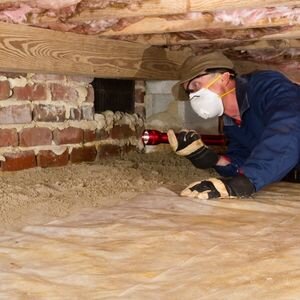
The first forty-eight hours count for more than week three. Standing water in a crawl space doesn’t need a week to start growing mold on floor joists. Warm Texas air and a humid cavity will handle that fast.
Pump the water out and get air moving under there before mold takes hold. Rent commercial fans if you have to. Photograph everything before it dries, including the water line on the piers. Your insurance company will want that evidence, and so will your buyer’s attorney later.
Call your insurance agent even if you expect a denial. A standard homeowners’ insurance policy in Texas typically covers sudden, accidental water damage, like a burst supply line. It typically excludes rising surface water and long-term seepage. Flood damage from a bayou or a creek falls under separate flood insurance. Your insurer makes that call, and a denial letter in your file is worth having when a buyer asks why you never filed.
Pull your plumbing repairs into one documented package. Keep the water damage restoration invoices apart from the drainage work. Buyers read those two stacks differently. One proves you cleaned up, and the other proves it won’t happen again.
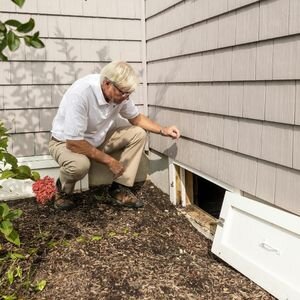
Then walk the grading around the property’s whole perimeter. That’s the first thing I check when I’m sizing up a property. Most crawl space moisture across South and Central Texas traces back to soil sloping toward the house or gutters that discharge at the foundation. A dead-flat yard with no drainage path does it too. When the water has already shifted piers or softened the beams, see how to sell a house with foundation problems in Texas.
What Does Texas Law Require Sellers to Disclose About Mold?
For years, I assumed a finished remediation wiped the slate clean on the disclosure form. It doesn’t, and the paperwork has gotten more specific about it.
Under Texas Property Code Section 5.008, most sellers of a single-family home must give the buyer a written Seller’s Disclosure Notice. It’s due on or before the day the sales contract takes effect. The notice asks about water damage not caused by a flood, improper drainage, previous structural repairs, or any condition that affects health or safety. Known mold falls squarely in that territory. You aren’t required to test your house. You are required to tell the truth about what you know.
Texas Occupations Code Section 1958.154 adds a separate duty. A seller has to give the buyer a copy of every Certificate of Mold Damage Remediation issued for the property in the five years before the sale. Since January 2025, the standard Texas Real Estate Commission sales contracts have carried a paragraph that spells out that same duty.
The flood questions on the notice surprise many sellers with their detail. They ask whether the property sits in a 100-year or 500-year floodplain on FEMA’s maps, or in a floodway, flood pool, or reservoir. Past water penetration from a natural flood goes on there, too. You’ll also say whether you’ve filed a flood insurance claim or gotten help from FEMA or the SBA for flood damage.
I’d rather see a seller over-disclose than get burned later. A buyer who hears about water damage from you negotiates. A buyer who hears about it from a neighbor after closing calls a lawyer. If you can’t tell whether something belongs on the notice, a Texas real estate attorney can sort it out in a fifteen-minute call.
What Are the Texas Mold Assessment and Remediation Rules?

One company can’t both inspect your mold and remove it on the same project. Texas bans that setup, with a narrow exception for school districts working on their own buildings. That rule keeps whoever diagnoses the problem from profiting when it grows.
The framework lives in the Texas Occupations Code Chapter 1958 and 16 Texas Administrative Code Chapter 78. The Texas Department of Licensing and Regulation enforces both. Twenty-five contiguous square feet is the number that governs everything. Below that threshold, you can hire any contractor or clean it yourself as the property owner. If you hire out a job at or above it, a licensed Mold Remediation Contractor has to do the work. Before that, a licensed Mold Assessment Consultant writes the remediation protocol.
State rules also require licensed assessors and remediators to give you a Consumer Mold Information Sheet before they start any mold-related work.
Regulation here keeps shifting. Legislation affecting mold assessors and remediators took effect September 1, 2025, and TDLR has posted implementation updates as it works through the changes. Look up any license number on the TDLR site before you sign a mold remediation contract.
Mold growth on floor joists across two or three bays of a crawl space usually clears that square footage threshold easily. Don’t guess at it. Get the measurement from someone licensed to take it.
Do Texas Buyers Need a Separate Mold Inspection Before Closing?
Skip this step, and a sale can unravel nine days before closing, when the buyer’s lender asks for a clearance document nobody arranged.
A standard Texas home inspector works under TREC rules and reports visible deficiencies. Think soft subfloor, damp insulation, poor drainage, and the smell of mildew. That inspector isn’t doing a mold assessment and generally won’t pull air or surface samples without a separate license. Indoor mold testing is its own discipline with its own credentials.
So buyers often order a second inspection. In Texas, that means hiring a licensed mold assessment technician or consultant, who records where the growth sits and how far it spreads before writing up findings. Buyers looking at pier-and-beam property in Corpus Christi, Rockport, or the older parts of Brownsville ask for it routinely. I think they’re right to.
Should you pay for that assessment yourself as the seller? If you’re listing on the open market, sometimes yes, since you control the story and the timeline. If you’re selling to a cash buyer who’s pricing the house as-is, it’s usually wasted money. They’re already assuming the worst-case moisture condition in their offer. If your house sits in the Rio Grande Valley, we buy houses in Harlingen as-is and won’t ask you to order that assessment.
The mold report itself rarely kills a transaction. The damage comes when it lands during the option period with no plan attached. That hands the buyer a reason to walk and a reason to re-trade the price at once.
What Is My Water-Damaged Home Worth Now?
A tidy three-bedroom house in McAllen appraised well in the spring. By late summer, a slab-adjacent plumbing leak had soaked the crawl space of its rear addition. Two buyers walked during the option period, and the third offered sixty cents on the dollar.
That gap is the real question you’re asking. Value after water damage comes down to repair cost, the cost of time, and the discount buyers apply for the risk they can’t measure.
You can estimate repair costs with contractor bids, though I’ve seen bids swing once someone opens up a wall. Time cost is where Texas sellers get hurt. Statewide, the median home took 68 days to sell as of August 2026, and that clock starts after your repairs finish. McAllen shows the same drag. Homes there sold at a median price of $277,000 over the three months ending August 2026, after a median of 66 days on the market. Carrying a vacant, damaged house through a full repair cycle and then a listing cycle can run four to six months of mortgage, taxes, and insurance.
Risk discount is the piece that sellers fight hardest. Buyers who spot one water stain assume three more are hidden. A documented repair with licensed paperwork recovers more value than the repair alone for exactly that reason.
When homeowners ask us for a straight number on a wet property, Fast House Buyers Texas runs the as-is math and the repair-then-list math side by side. Seeing both keeps the comparison honest. Contact us if you’d like to see both sets of numbers for your own house.
Does a Mold Clearance Certificate Raise Your Texas Home’s Value?
“Why would I pay for a certificate when the buyer’s just going to discount me anyway?”
Fair question, and the answer depends on who your buyer is. A Certificate of Mold Damage Remediation is a Texas Department of Insurance form, the MDR-1, tied to Occupations Code Section 1958.154. Your remediation contractor has to give it to you within 10 days of finishing. The licensed mold assessment consultant who checked the finished work signs it too. For a retail buyer getting financing, that document does real work. It turns a scary unknown into a closed file.
There’s an insurance angle too. Texas rules at 28 Texas Administrative Code Section 21.1007 limit how insurers can use previous mold damage, mold claims, and water damage claims in their underwriting guidelines. Properly certified remediation sits at the center of those protections. For appliance-related water claims, an insurer that keeps a list of approved inspectors must tell you that you can choose your own. Its written notice is due within 15 days after it hears about the claim. Your buyer’s ability to get a homeowners insurance policy at a normal premium affects whether your sale closes at all.
For an investor buyer, the certificate barely moves the price. They’re gutting the affected area regardless.
My take: certify when you’ve already paid for mold remediation. The document costs a fraction of the work and protects its value. Don’t remediate just to get the certificate if you’re selling as-is.
Should You List with a Texas Agent or Sell to a Cash Home Buyer?
Repair the crawl space, list it clean, and collect full market value, which is the plan most sellers sketch out on day one. It holds up when the damage is contained, you’ve got cash for contractors, and the house can sit empty for a few months without straining anybody. The Texas Real Estate Research Center at Texas A&M projects roughly 349,000 single-family sales in 2026, a gain of about 2.5 percent. Dry, finished houses won’t run short of buyers.
You’ll see the plan break once the repair scope starts growing. Pull up one section of flooring, and you find joist rot. Replace the joists, and the HVAC ductwork under the house has to come out. Meanwhile, your option-period buyer is reading a mold report.
A real estate agent earns a commission on a property that shows well. On a wet pier-and-beam house with an unresolved moisture source, you’re paying a percentage to watch contracts fall through.
Selling to a cash home buyer trades price for certainty. You accept a discount that reflects the unknown scope. In exchange, you stop paying for a house you’ve already mentally left. There’s no option-period re-trade, no lender-ordered inspection, and no appraiser flagging the crawl space. If the moisture source is still active and you lack the money or the appetite to chase it, that trade is often the honest one. When that’s the path you pick, you can sell your home for cash in Texas without touching the crawl space first.
The middle path nobody mentions starts with a plumber’s leak test and a single assessment before you decide anything. A few hundred dollars of diagnosis tells you whether you’re facing a $4,000 problem or a $40,000 one. Let that number pick your sale path instead of a gut feeling.
Frequently Asked Questions
Do I Have to Disclose Crawl Space Mold If It Was Remediated Years Ago?
Yes. Disclosure covers past water problems and repairs as well as current ones, and any remediation certificate from the last five years goes to the buyer. Disclose the issue and the repair, and attach the certificate if you have one. Fixed and documented reads far better than discovered later.
Can a Buyer Back Out Over Crawl Space Mold Found During the Option Period?
During the option period, a buyer can terminate for any reason at all. That’s what the option fee buys. After it expires, termination depends on the contract and any amendments, which is why most mold negotiations happen before that clock runs out.
Will My Homeowners Insurance Cover Crawl Space Mold?
Usually, only when the mold comes from a covered sudden water loss, like a burst supply line. Long-term seepage, foundation moisture, and poor ventilation are typically excluded as maintenance issues. Read your policy’s mold limit, since some policies cap it well below the cost of the work.
How Much Does Crawl Space Mold Remediation Cost in Texas?
It ranges widely because the mold is rarely the expensive part. Encapsulation, drainage correction, joist or subfloor replacement, and plumbing repairs drive the number. Small contained jobs run a few thousand dollars, but once the structure’s involved, you’re into five figures fast.
Does a Mold Remediation Certificate Expire?
The certificate documents a point in time. It doesn’t guarantee future conditions, and if moisture returns, so does the mold. Buyers and insurers generally want proof that the underlying water source has been fixed, along with the cleanup.
Your Next Step With a Wet Crawl Space
If you’re sitting on a Texas house with a damp crawl space and would rather not find out what’s under the subfloor, we’ll take a look at it as-is. You’ll get a straight number. There’s no cleanup, no contractor bids, and no repairs on your dime. Take the offer, or take it to your agent for comparison. Either way, you’ll know where you stand. Selling in the Coastal Bend? Here’s how we buy houses in Corpus Christi.
Helpful Texas Blog Articles